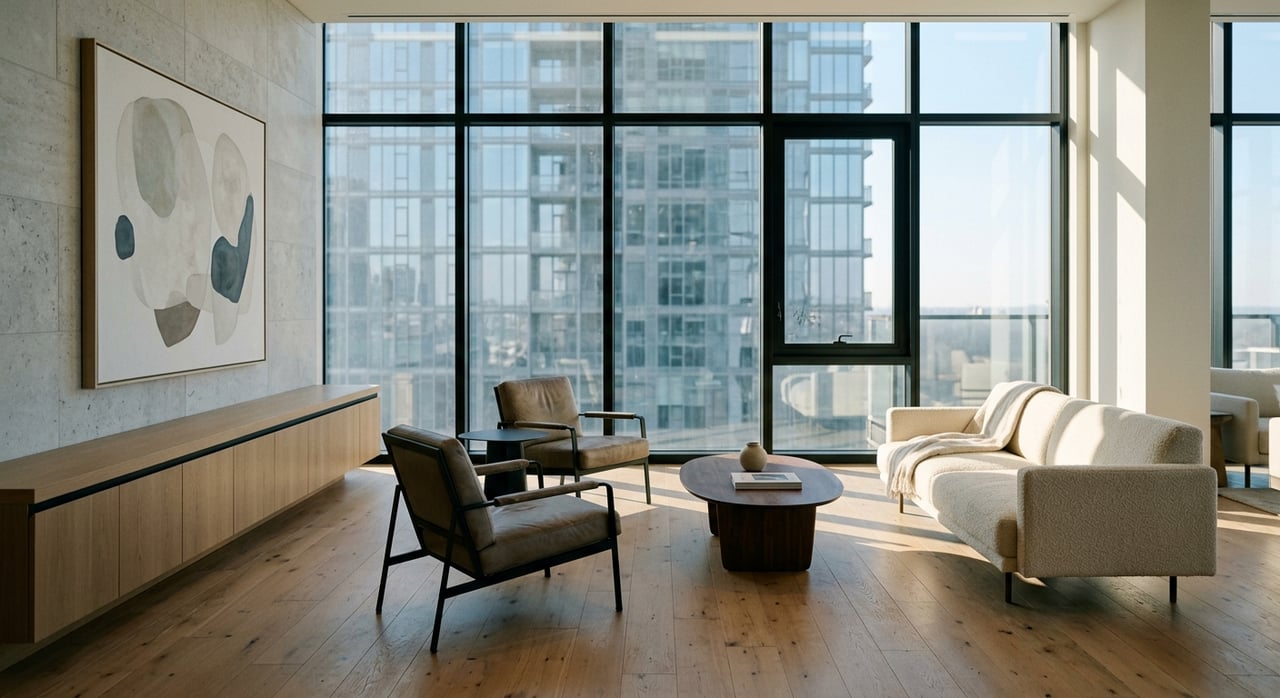
If you picture high-rise living as all views and no real day-to-day comfort, Jersey City may surprise you. For many buyers and renters exploring this market, the real question is not whether the skyline looks good, but whether the lifestyle actually works. In Jersey City, the answer often comes down to transit, amenities, and what you want your routine to feel like. Let’s dive in.
Why Jersey City High-Rises Stand Out
Jersey City packs a lot into less than 15 square miles, with about 265,000 residents. The city also describes itself as the most diverse city in New Jersey, and its tower-heavy high-rise experience is most visible in areas like Paulus Hook, Liberty Harbor, Exchange Place, Newport, Newark Avenue Downtown, Grove Street Station, and Journal Square 2060.
That matters because high-rise living here is not built around isolated towers cut off from the city. Instead, many buildings sit near major transit nodes, waterfront access, restaurants, and public spaces. In practical terms, that often means your building becomes part of a larger walkable, car-light routine.
What You Really Get in the Building
One of the biggest draws of Jersey City high-rise living is the building itself. Many newer towers lean hard into shared spaces that make daily life easier, more social, and more flexible.
At Journal Squared, for example, advertised amenities include more than 100,000 square feet of shared space. That includes pools, cabanas, grills, fire pits, fitness and yoga rooms, co-working space, study nooks, a kids room, a soundproof studio, a karaoke lounge, bicycle storage, indoor parking, package concierge, and direct covered access to the Journal Square PATH station.
At 99 Hudson, the amenity package includes a 24-hour doorman, hotel-style concierge service, 65,000 square feet of private amenities, a pool, fitness center, yoga, pilates and meditation studio, business center, screening room, game room, playroom, outdoor dog run, indoor parking, and outdoor dining and grilling areas.
The key takeaway is simple: not every high-rise offers the same lifestyle. Some towers focus on resort-style amenities and luxury common areas. Others may put more emphasis on direct transit access and a smaller amenity mix. If you are comparing buildings, it helps to look beyond the lobby and ask how the building supports your actual routine.
Transit Shapes the Lifestyle
In Jersey City, commute and mobility are a major part of the high-rise value. If you want to live with less dependence on a car, this is one of the strongest reasons buyers consider the market.
PATH Is the Core Connection
PATH remains the main Manhattan link for many residents. As of May 4, 2026, the one-way PATH fare is $3.25. Stations like Journal Square, Grove Street, and Newport connect to the Journal Square to 33rd Street line and World Trade Center branches, and PATH identifies Journal Square, Grove Street, Exchange Place, Newport, and Hoboken as elevator-accessible stations.
That network matters in real life because it gives many residents a direct, repeatable commute pattern. The Port Authority also announced direct weekend Journal Square to 33rd Street service and restored Hoboken to World Trade Center weekend service in May 2026, which adds flexibility beyond the weekday rush.
Light Rail and Ferries Add Options
PATH may be the headline, but it is not the only mobility layer. NJ TRANSIT says the Hudson-Bergen Light Rail connects western Jersey City with Exchange Place and Newport Center, and stations such as Exchange Place include practical features like parking and bike racks.
Ferry service also plays a big role, especially for waterfront buildings. Jersey City terminals include Paulus Hook, Harborside, Liberty Harbor, and Port Liberté, with service to Midtown/W. 39th Street, Wall Street/Pier 11, and Brookfield Place/Battery Park depending on the terminal.
Small Details Matter More Than You Think
When you rely on transit, station details become part of your quality of life. Journal Square Station, for example, advertises a heated waiting area and restrooms inside the transportation center. That may sound minor at first, but it can matter a lot during cold-weather commuting or long travel days.
Where Car-Light Living Works Best
If your goal is to live with fewer car trips, location inside Jersey City matters just as much as the building. High-rise living tends to work best in areas where transit, dining, and daily errands overlap.
Downtown and waterfront areas like Exchange Place, Newport, Paulus Hook, Grove Street, and Liberty Harbor often appeal to people who want easy access to PATH, ferry service, or the waterfront walkway. Journal Square stands out for buyers who want strong PATH access and a growing tower district centered around the transportation hub.
That does not mean every building offers the same experience. One tower may give you direct station access, while another may trade that for more dramatic views or a deeper amenity package. The best fit depends on whether you value commute speed, building features, or neighborhood energy most.
What Life Looks Like After Work
A high-rise can check every box on paper, but the surrounding neighborhood is what shapes your off-hours. In Jersey City, that lifestyle extends well beyond your front desk and elevator.
Dining Near the Core Corridors
Newark Avenue’s pedestrian Eat Street is one of the clearest examples. Hudson County Tourism describes it as restaurant row directly outside the Grove Street PATH stop, with the main area closed to traffic and offering sidewalk dining, rooftop and outdoor seating, and a broad range of options including pizzerias, cocktail lounges, craft beer spots, vegetarian choices, Italian, ramen, and more.
That kind of concentration changes how a neighborhood feels. Instead of planning your night around driving somewhere else, you can often walk out of your building and have multiple casual or social options within minutes.
Arts and Events Add Energy
Jersey City also offers a strong arts and culture scene for a city its size. The city highlights art fairs, ethnic festivals, local theater, film, and performing arts, and says JCAST includes nearly 1,000 participating artists across hundreds of venues.
White Eagle Hall adds another layer with year-round live events including music, theater, comedy, dance, film, and family programming. For people considering a move from Manhattan or Brooklyn, this kind of local programming can make Jersey City feel less like a commuter outpost and more like a complete urban lifestyle.
Outdoor Space Is Part of the Appeal
One common assumption about high-rise living is that you give up access to real outdoor space. In Jersey City, that is not quite true.
Liberty State Park offers skyline, Statue of Liberty, and Ellis Island views, a two-mile promenade, wide-open fields, marina and restaurant access, the Empty Sky 9/11 Memorial, Liberty Science Center, and year-round ferry service to Brookfield Place in Manhattan. For many residents, that means major open space is part of the weekly routine, not a special trip.
The Hudson River Waterfront Walkway adds another major benefit. It is largely complete through Jersey City and runs for roughly 18.5 miles from Bayonne to the George Washington Bridge, serving walkers and bikers as a daily recreation corridor.
If you like the idea of city living without feeling boxed in, this is one of Jersey City’s strongest advantages. You can have a vertical home base and still keep water views, long walks, or bike rides built into your schedule.
Luxury Versus Convenience
This is where buyers need to get honest about priorities. Jersey City high-rise living can offer both luxury and convenience, but the balance changes from one building and neighborhood to another.
Some buildings are clearly designed around an amenity-rich, almost resort-like experience. Others are more about location efficiency, station access, and a simpler urban setup. Neither is automatically better.
A smart search usually starts with a few questions:
- Do you want direct access to PATH or ferry service?
- How much do you value a doorman, concierge, or package handling?
- Will you actually use amenities like a pool, co-working area, or fitness rooms?
- Do you want to be closest to the waterfront, downtown dining, or Journal Square transit?
- Are views a priority, or is convenience the bigger win?
The clearer you are on those answers, the easier it becomes to separate a beautiful listing from a genuinely good fit.
What High-Rise Living Really Offers
At its best, Jersey City high-rise living offers a transit-linked, amenity-rich urban routine with easy Manhattan access, strong waterfront appeal, and more parks, dining, and arts programming than many buyers expect. It is not one-size-fits-all, and that is actually part of the appeal.
The right building can support your workday, your weekends, and your longer-term lifestyle goals. If you are thinking about buying or selling a condo in Jersey City, having local guidance matters because the experience can change dramatically from one tower or corridor to the next.
If you want expert help sorting through Jersey City condos, towers, and neighborhood fit, connect with Amber Cruse for a white-glove real estate experience tailored to your goals.
FAQs
What does high-rise living in Jersey City usually include?
- Many Jersey City high-rises offer amenities such as doorman service, concierge support, fitness centers, pools, co-working areas, package handling, parking, bike storage, and outdoor shared spaces, but the exact mix varies by building.
Can you live in Jersey City high-rises without a car?
- In many cases, yes, especially near PATH, Hudson-Bergen Light Rail, or ferry service in areas like Downtown, the waterfront, and Journal Square.
Which Jersey City areas have the most high-rise buildings?
- Jersey City’s official redevelopment map suggests the heaviest tower concentration is in areas such as Paulus Hook, Liberty Harbor, Exchange Place, Newport, Newark Avenue Downtown, Grove Street Station, and Journal Square 2060.
Is Jersey City high-rise living mostly about luxury amenities?
- Not always. Some towers focus heavily on resort-style amenities, while others emphasize transit access and a more practical urban lifestyle.
What is the PATH fare for Jersey City commuters?
- As of May 4, 2026, the one-way PATH fare is $3.25.
What outdoor spaces support Jersey City high-rise living?
- Liberty State Park and the Hudson River Waterfront Walkway are two major outdoor assets, offering space for walking, biking, waterfront views, and everyday recreation.