"Atlantic City is the last shore community where you can live steps from the beach at an affordable price." Brian Zoubek said this on May 20, standing in front of ten finished townhomes on South Kentucky Avenue while Governor Mikie Sherrill and Mayor Marty Small stood beside him for the ribbon cutting. It's a true statement. It's also an incomplete one, and the part he left out is the part that matters if you're actually comparing this corridor to Ocean City, Margate, or Longport with real money on the table.
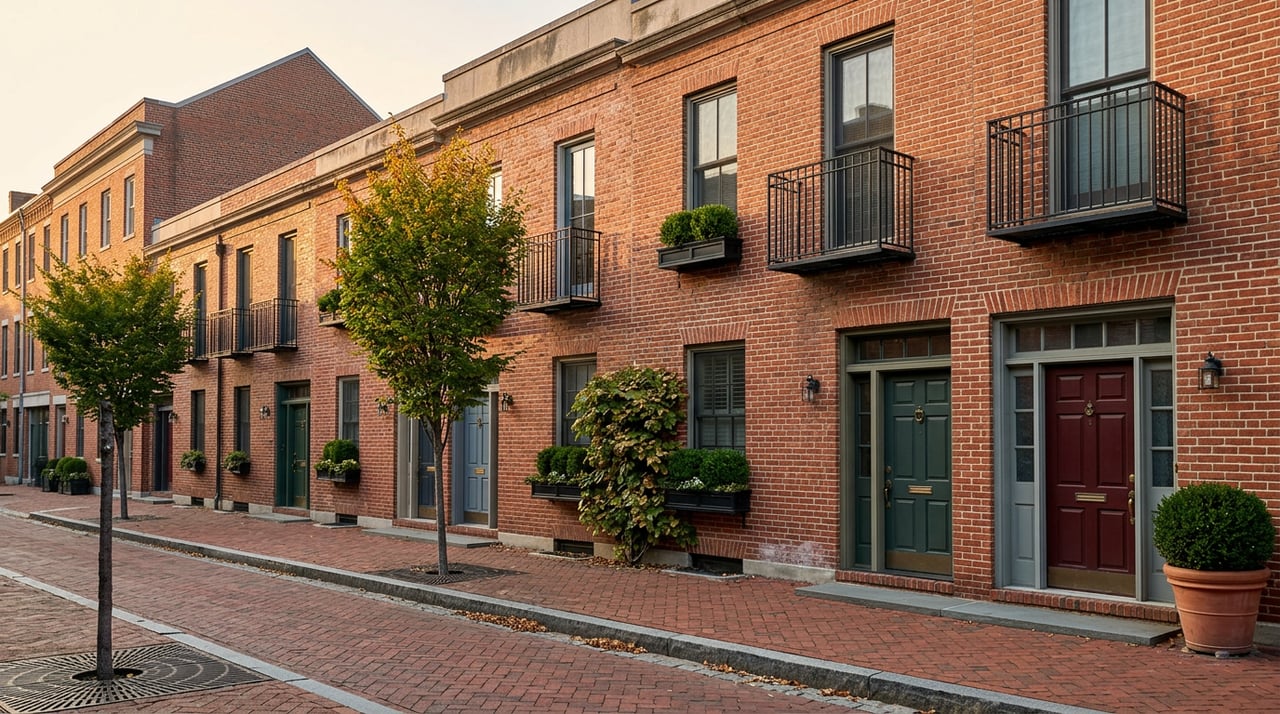
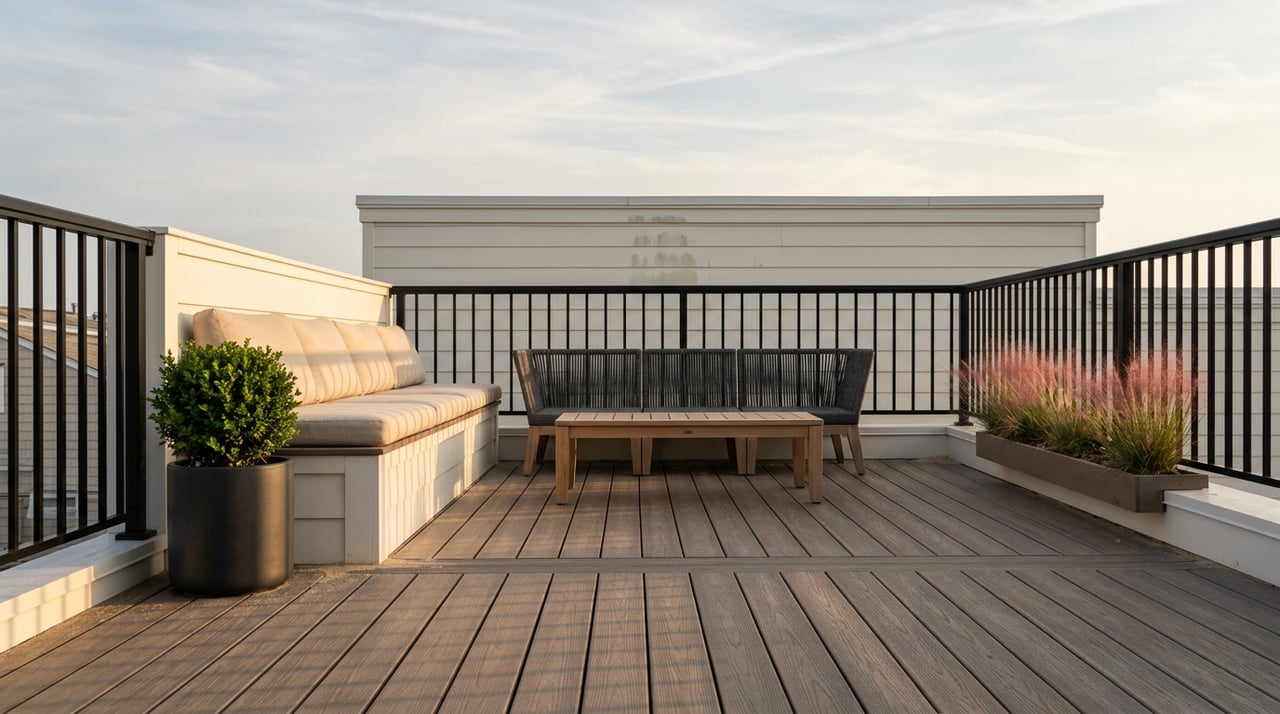
The Residences at Orange Loop opened its first phase this spring: ten of a planned twenty-nine townhomes, three bedrooms, three and a half baths, roughly 2,000 square feet across three stories, a three-car garage, and a full rooftop deck with ocean views, all inside a block of the Boardwalk. Starting price was $599,000. Zoubek's pitch, and the one Sherrill echoed at the ceremony, is that this is what shore living costs when it isn't inflated by decades of scarcity. What nobody at the podium said outright is that the price also reflects a neighborhood that is still under construction around those ten homes, and that the discount you're seeing today is priced to a completion date that hasn't happened yet.
What's actually finished versus what's promised
Ten townhomes exist. Nineteen more don't. Zoubek Properties has said construction on Phase II is expected to begin in late 2026, which means anyone buying into the second phase right now is buying a unit that hasn't broken ground, timed to a schedule that depends on permitting, labor, and financing all lining up on plan.
The same is true of the businesses meant to make this a neighborhood rather than a housing pod. A few blocks away on Tennessee Avenue, developer Mark Callazzo is building the Top Hat, a six-room boutique hotel with a rooftop deck overlooking Resorts, Hard Rock, and Steel Pier, and a nearby shipping container park funded in part by nearly $6 million from the New Jersey Economic Development Authority's Activation, Revitalization and Transformation Program. As of early August, 17 of the container park's 22 planned small-business spaces were filled, with the rest still in negotiation. Both projects are targeted to open toward the end of 2026. Targeted is doing real work in that sentence. Neither has opened yet.
So the honest version of Zoubek's line is this: Atlantic City is the last shore community where you can buy new construction steps from the beach at this price, provided you're comfortable owning inside an active development zone for another year or more while the surrounding pieces finish landing.
"If you can deliver high-quality, design-driven housing at an accessible price point steps from the Atlantic City beach, demand will follow. That's exactly what we've done here." — Brian Zoubek, President and CEO, Zoubek Properties
That's a confident claim from a developer with a financial stake in the answer. It doesn't make it wrong. It does mean the reader comparing this to a finished neighborhood in Ocean City is comparing two different products that happen to share a zip code's worth of ocean access.
What the same money buys ten miles up the coast
Here's where the price gap becomes concrete instead of aspirational. Depending on which data source you check for early-to-mid 2026, Ocean City's median sale price lands somewhere between roughly $838,000 and $1.4 million, with typical home values around $977,000 as of June. Margate's market has stayed active for homes priced under $1.5 million, including a steady appetite for teardown lots. Longport, which has almost no land left to build on, has been running a median near $1.94 million this spring.
| Market | Approximate price point (early-mid 2026) | What it buys |
|---|---|---|
| Orange Loop, Atlantic City | $599,000 starting | New construction, 3 bed/3.5 bath, 3-car garage, rooftop deck, block from Boardwalk |
| Ocean City | roughly $838K–$1.4M depending on source | Existing housing stock, established neighborhood, longer time on market (around 100+ days) |
| Margate | under $1.5M common, teardowns in demand | Existing homes, often requiring renovation or rebuild |
| Longport | around $1.94M median | Extremely limited inventory, no meaningful new construction |
Put plainly, the Orange Loop townhomes are pricing at less than half of what a comparable new build would likely cost in Ocean City, and less than a third of Longport's median. That's not a rounding error. It's a structural gap, and it exists because Atlantic City's Orange Loop is where new-construction shore housing is being built at all, while the barrier island towns to the south are essentially full.
Why the gap exists, and why it's an incentive story more than a bargain
The Orange Loop corridor spent years as what locals openly called a dead zone, three beach blocks of Tennessee Avenue, New York Avenue, and St. James Place that emptied out as casinos consolidated. That history is the reason land here was cheap enough for Zoubek Properties, Callazzo, and other developers to assemble it, and it's the reason the state stepped in with NJEDA grant money to help finance the container park rather than leaving it to private capital alone.
That combination, cheap land plus public subsidy for adjacent infrastructure, is what makes $599,000 arithmetically possible in a way it isn't in Ocean City or Longport, where there's no comparably underused land left to redevelop. It's not that Atlantic City has found a more efficient way to build shore housing. It's that this specific stretch of it was priced for redevelopment risk, and buyers today are the ones absorbing that risk in exchange for the lower number.
More than fifteen projects are currently under construction, planned, or moving through approvals in the Orange Loop district right now, according to reporting this spring. That's a meaningful concentration of activity for three blocks, and it's the reason city officials keep describing this as a turning point rather than a one-off. It's also the reason a buyer should treat the current pricing as a snapshot of a neighborhood mid-transition, not a stable baseline.
What's still under construction as of this fall
If you're weighing a purchase on this corridor, here's what exists today versus what's still pending, based on the most recent reporting:
- Delivered: the first ten Residences at Orange Loop townhomes, Tennessee Avenue Beer Hall (under new managing partner Salvatore Spena since a 2025 renovation), Cardinal restaurant, Anchor Rock Club, and Hayday Coffee, all established and operating.
- Under construction, targeted for late 2026: the Top Hat boutique hotel at 215 South Tennessee Avenue, and the shipping container park at 1400 Pacific Avenue.
- Not yet started: Phase II of the Residences at Orange Loop, 19 additional townhomes, construction expected to begin in late 2026.
Anyone closing on a home here this fall is closing next to two active job sites and ahead of the second residential phase. That's the part of the story a glossy ribbon-cutting photo doesn't show.
What this means if you're actually comparing markets
- Price the discount to a date, not a permanent condition. If the Top Hat, the container park, and Phase II all land roughly on schedule by the end of 2026 or into 2027, the Orange Loop's value proposition strengthens as the neighborhood fills in. If any of them slip, you're holding a home in a corridor that still reads as unfinished for longer than expected.
- Ask what's actually operating versus what's rendered. A rooftop deck view of Resorts and Hard Rock is a selling point. A rendering of a container park with 22 tenants is a plan. Confirm which businesses around a specific address are open today, not projected.
- Weigh the trade against a finished market. Ocean City and Margate cost more in part because there's nothing left to build and no execution risk left to absorb. That premium buys certainty. The Orange Loop's price buys upside, contingent on delivery.
FAQ
Is the Orange Loop the same as Atlantic City's Boardwalk casino district? No. The Orange Loop is a three-block stretch of Tennessee Avenue, New York Avenue, and St. James Place, just off the Boardwalk but distinct from the casino corridor. It's built around independent restaurants, bars, and now residential development rather than gaming.
Are there more units available at the $599,000 starting price? The first phase delivered ten townhomes at that starting price point. Phase II, another 19 units, hasn't broken ground yet, and pricing for that phase hasn't been confirmed publicly as of this writing.
Does the state's involvement in projects like the container park affect resale value? Public investment through programs like NJEDA's Activation, Revitalization and Transformation Program is generally aimed at supporting adjacent commercial infrastructure rather than the residential units themselves. It's a signal of confidence in the corridor's trajectory, not a guarantee attached to any individual property.
If you're weighing the Orange Loop against Ocean City, Margate, or another shore comparison and want a read on how the timeline risk here actually pencils out for your specific goals, Amber Cruse Realty Group can walk through what's delivered, what's still pending, and what that means for your offer. Request your white-glove consultation and get a straight answer before you commit to a neighborhood that's still being built.